
Macrodiplophyllum microdontum
| Common Name | None |
| Quick & Dirty ID | XXXXXX |
Image Gallery
Distinguishing Features
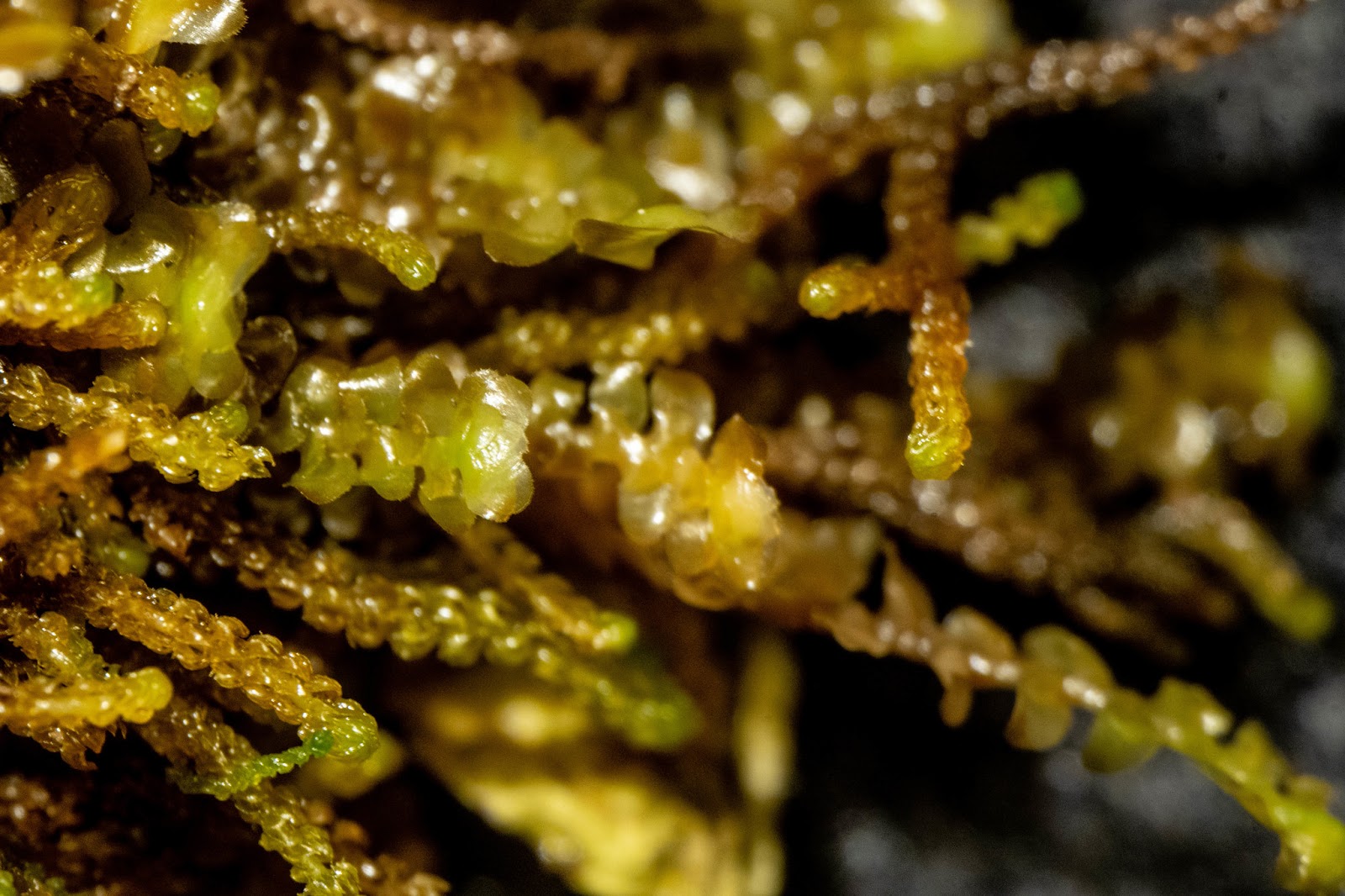
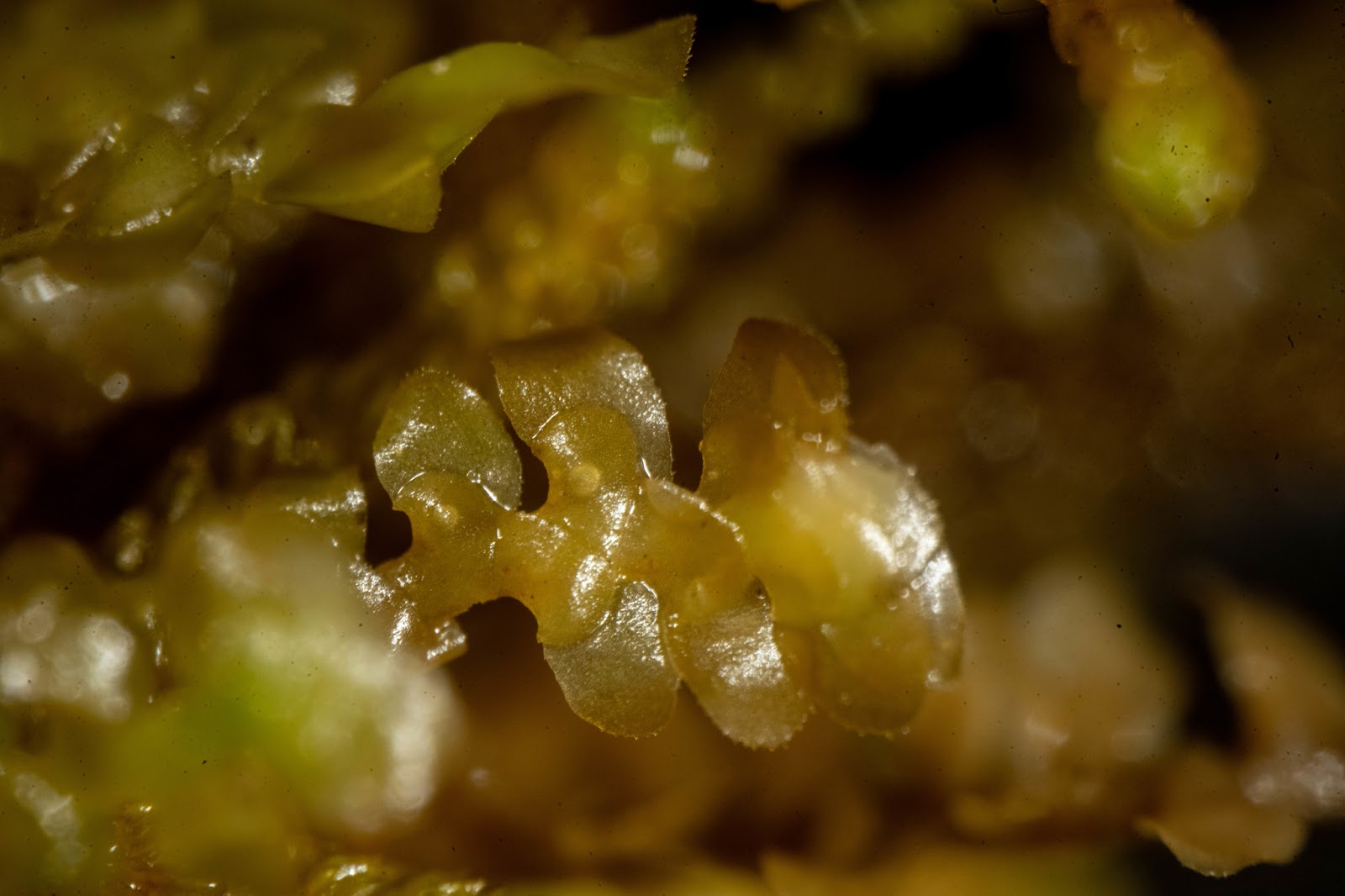
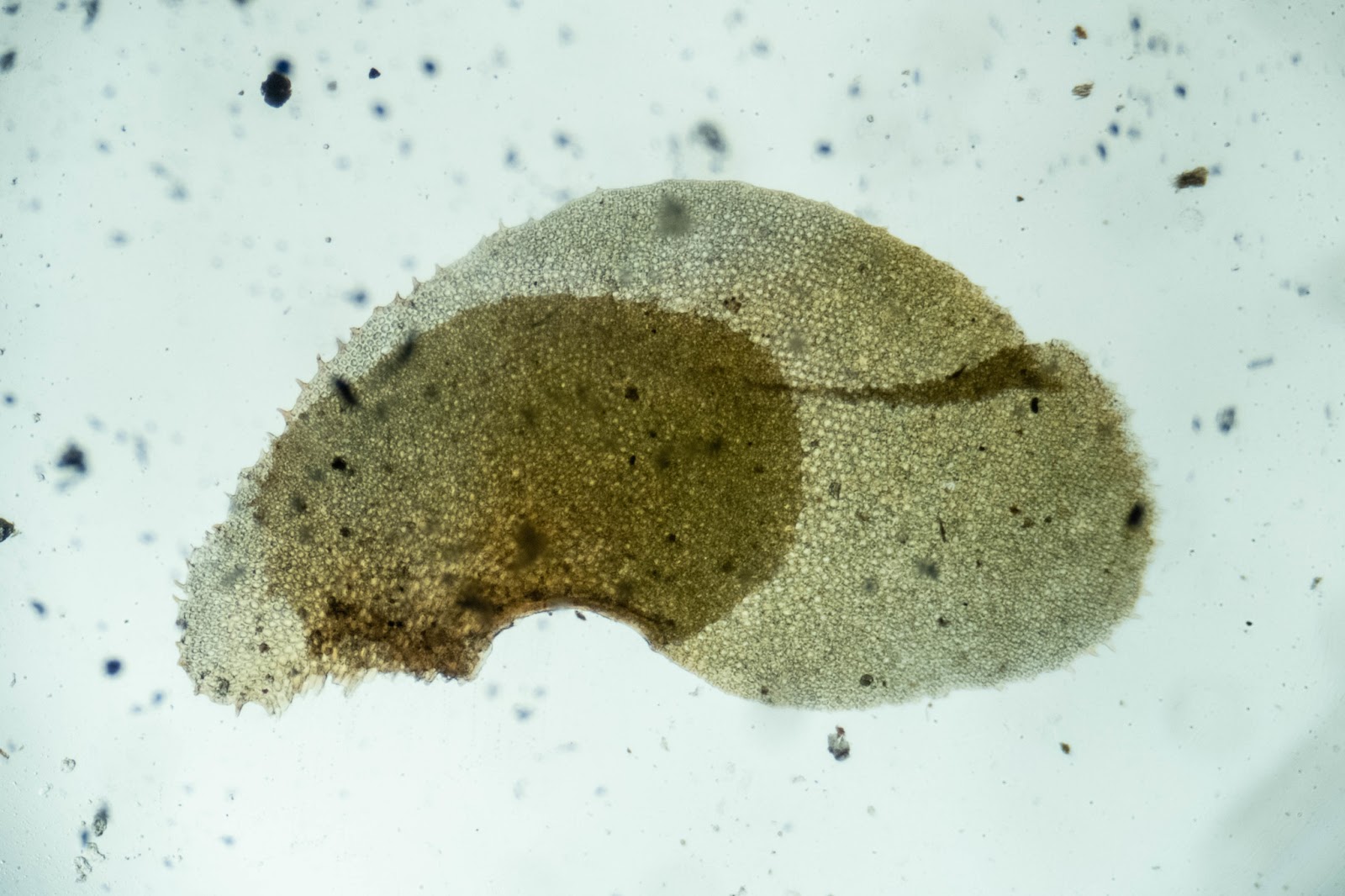
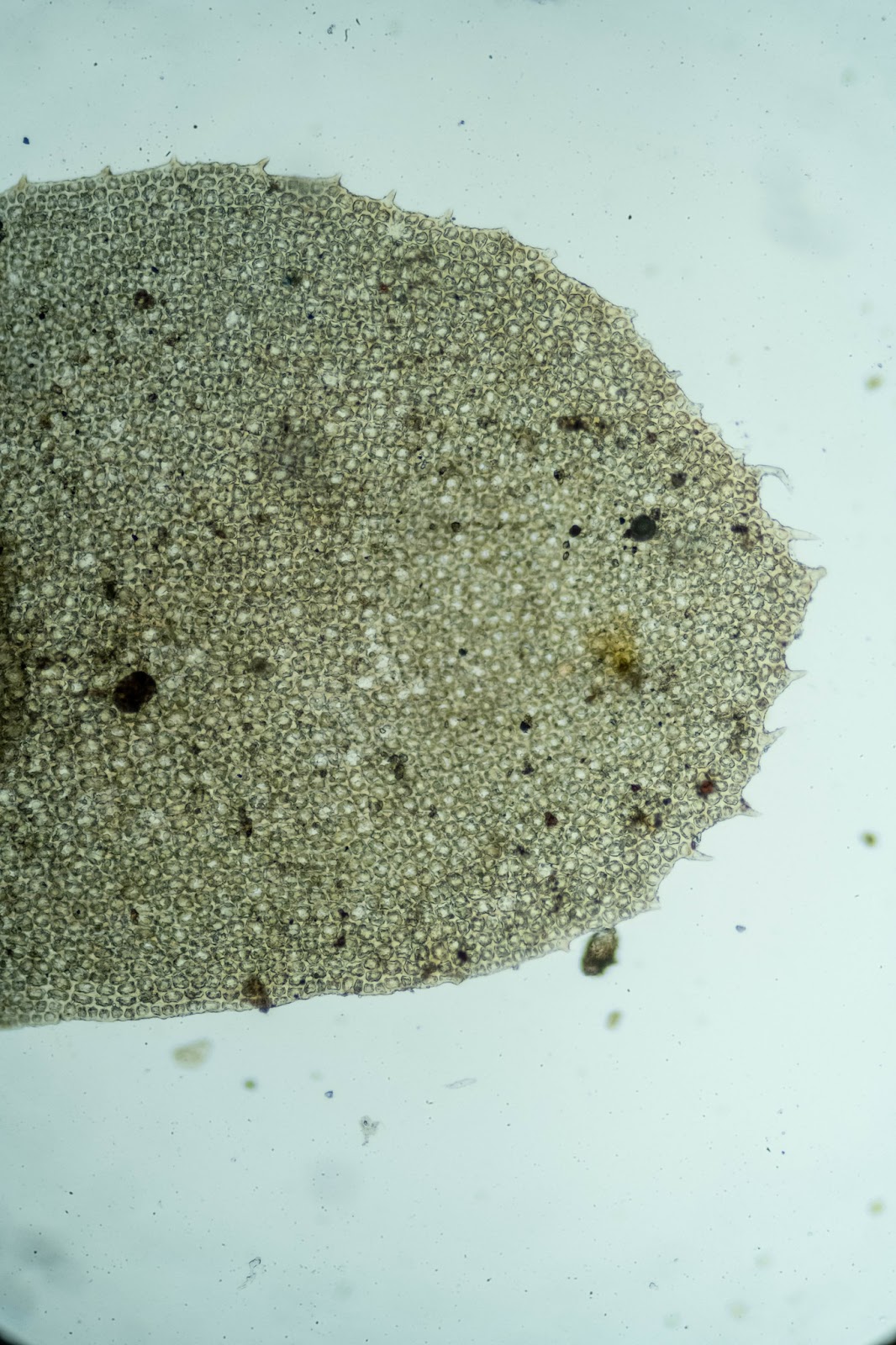
An easily overlooked species of hard to access polar and alpine tundra habitats, M. microdontium is known from only a few records in the northern fringes of the Pacific Northwest. The golden-brown, ascending shoots are 3-7 cm long and roughly 4 mm wide. Like other members of its genus, the two unequal and elongate lobes of the leaf unite along a keel towards their base, with the upper lobe about one-half the size of the lower lobe. The upper lobe in this species crosses the entire length of the stem before wrapping around it tightly (see photo) and the tips of both lobes point 90 degrees away from the stem. Confident identification requires mounting of the leaf on a slide so that the presence large leaf papille (see photo) and teeth along the inner margin of the lower lobe can be confirmed.
Similar species
The elongate, round-tipped and unequal toothy leaf lobes could only be mistaken for species within its own genus or the closely related genera of Scapania and Diplophyllum. Species of Scapania have rounder lobes compared to the elongate lobes of M. microdontium. Diplophyllum taxifolium can be found in arctic and alpine tundra, too, but that species lacks papillae on the leaf cells and has a upper lobe that does not cross the width of the stem. Macrodiplophyllum rubrum is the only other taxon to show this character, but it is a species of wet coastal forests and it, too, lacks papillae on the leaf cells.
Habitat
Moist arctic and alpine tundra
Associated species
XXXXXX
Distribution Map
Relevant Literature
- Godfrey, J.D. (1977). Hepaticae and Anthocerotae of southwestern British Columbia . [Doctoral dissertation, University of British Columbia]. UBC cIRcle.
- Hong, W. S. (2007). Scapania. In Flora of North America Editorial Committee (Eds.), Flora of North America North of Mexico (Vol. 3) . Oxford University Press.
- Wagner, D. H. (2013). Guide to the liverworts of Oregon: Scapania undulata . Oregon State University Herbarium.